How to Win Back Customers: A Reactivation Guide for Malta
How to win back customers who went quiet: who counts as lapsed, a real reason to call, the words to use, the Malta rules and a monthly routine.
Somewhere in your phone is a list of people who paid you once and then went quiet. The couple whose air conditioners you serviced two summers ago. The patient who missed a recall. The restaurant that ordered from you every week, then stopped. Nobody fell out. Life moved on, and nobody called.
This guide is about how to win back customers like these. It covers why past customers are often your cheapest sales, and what the famous research really says. Then it gets practical: who counts as lapsed in your trade, how to find them in what you already have, the reason to call, the words to use on the phone and in a message, the rules in Malta, a monthly routine, and how to tell if it works.
Why past customers are often your cheapest sales
A new customer costs you something before they pay you anything: the advert, the quote, the site visit, the follow-up. A past customer has been through all of that. They know your name, your work and your prices. The hard part of the sale was paid for the first time. What is left is a reason and a call.
That is the idea behind the retention research. The numbers usually quoted are not quite what was published, so here is what it found.
What the famous retention numbers really say
The source is a 1990 Harvard Business Review article by Frederick Reichheld of Bain and Earl Sasser of Harvard, “Zero Defections: Quality Comes to Services”. Its summary reports that cutting the defection rate by 5% produced 85% more profit in one bank's branch system, 50% more in an insurance brokerage and 30% more in an auto-service chain. When MBNA, a credit card company, halved its 10% defection rate, profits rose 125% (Reichheld and Sasser, HBR 1990, abstract on PubMed). The authors add that the size of the change “varies by company and industry”.
The line most blogs quote, that 5% more retention lifts profits by “25% to 95%”, first appears in a later article by Reichheld and Phil Schefter, “E-Loyalty”, in 2000, as a summary of the 1990 work (Bain & Company). Bain's own short note puts it more modestly: in financial services, a 5% increase in retention produces “more than a 25% increase in profit” (Reichheld, Prescription for cutting costs).
And the claim that a new customer costs “five to 25 times” more than keeping one? It appears in a 2014 HBR piece with no study behind it (Gallo, HBR 2014). We could not trace it to an original source, so we do not use it.
Read them with care. They come from large American service firms in the 1980s, and they are about keeping customers, not winning them back. But the reason behind them carries over to a plumber in Qormi: winning a customer is expensive at the start, and cheaper every year they stay.
What win-back research adds
The largest published study of win-back we found looked at more than 53,000 people who had left a US telecoms company (Kumar, Bhagwat and Zhang, Journal of Marketing, 2015; summary in HBR, 2016). Three findings matter for a small business.
First, the stronger the first relationship, the more likely a customer is to come back. People who had recommended the company were easier to win back. Second, customers who left over service were more profitable once back than those who left over price. Third, the offer matters, but not in the obvious way. A discount plus an upgrade brought the most people back, but those customers left again soonest and spent least. A better service on its own brought fewer back, but they stayed longest and spent most. Lead with a reason and better service. Keep discounts for last, if at all.
Who counts as a lapsed customer?
A lapsed customer is not just someone you have not seen for a while. It is someone who is late, against their own buying cycle. Six months is nothing for a kitchen and a long time for a hairdresser. Write down how often a good customer normally buys. Anyone past that, plus a margin, is lapsed.
Here is how that looks across the businesses we work with.
- Trades with annual services. Air conditioning, water heaters, solar panels, pest control, pools, roof waterproofing. The cycle is usually a year, often tied to a season. Lapsed means they missed last year's service.
- Clinics with recalls. Dentists, hygienists, physios, opticians. The cycle is set by the clinician. In the UK, NICE guidance puts routine dental check-ups between three and 24 months for adults, depending on risk (NICE CG19). Lapsed means past their recall date with nothing booked.
- Salons, barbers and beauty. Weeks, not months. A six-weekly regular who has not been in for three months has probably found someone else.
- B2B suppliers. Restaurants, hotels, offices. A weekly account a month quiet is lapsed. So is a hotel that ordered before every summer and did not this year.
- Agencies and professional services. A project every year or two. Lapsed means the next one has not started, or went elsewhere.
How to get old customers back: start with the list you already have
You do not need a CRM. You need an hour and the places where your old work is written down, in this order.
- Invoices and receipts. Your accounting software, invoice book or your accountant's sales ledger. Every name there bought from you.
- The diary. Anyone booked a year ago with nothing booked now is due.
- Old quotes. Accepted quotes are past customers. Quotes that went quiet are a different list; they need quote follow-up, not this.
- WhatsApp chats and call logs. In Malta, a year of chats is often a year of customers. Our guide to WhatsApp Business for sales shows how to label them for next time.
- Your own memory. The good customers you have not heard from. Write them down now.
Who to call first
Put the list on one sheet: name, number, what they bought, when. Call first the people who bought most often, spent most, or sent you others; the research says they are the likeliest to come back. Anyone who once told you to stop stays off the list, for good.
The reason to call: never just “checking in”
The surest way to waste a list of past customers is to ring them all and say “just checking in”. It gives them nothing to say yes to. Every reactivation call needs a reason the customer would care about. Here are the ones that work for owner-run businesses.
Oh, good. I'd been meaning to ring you about that.
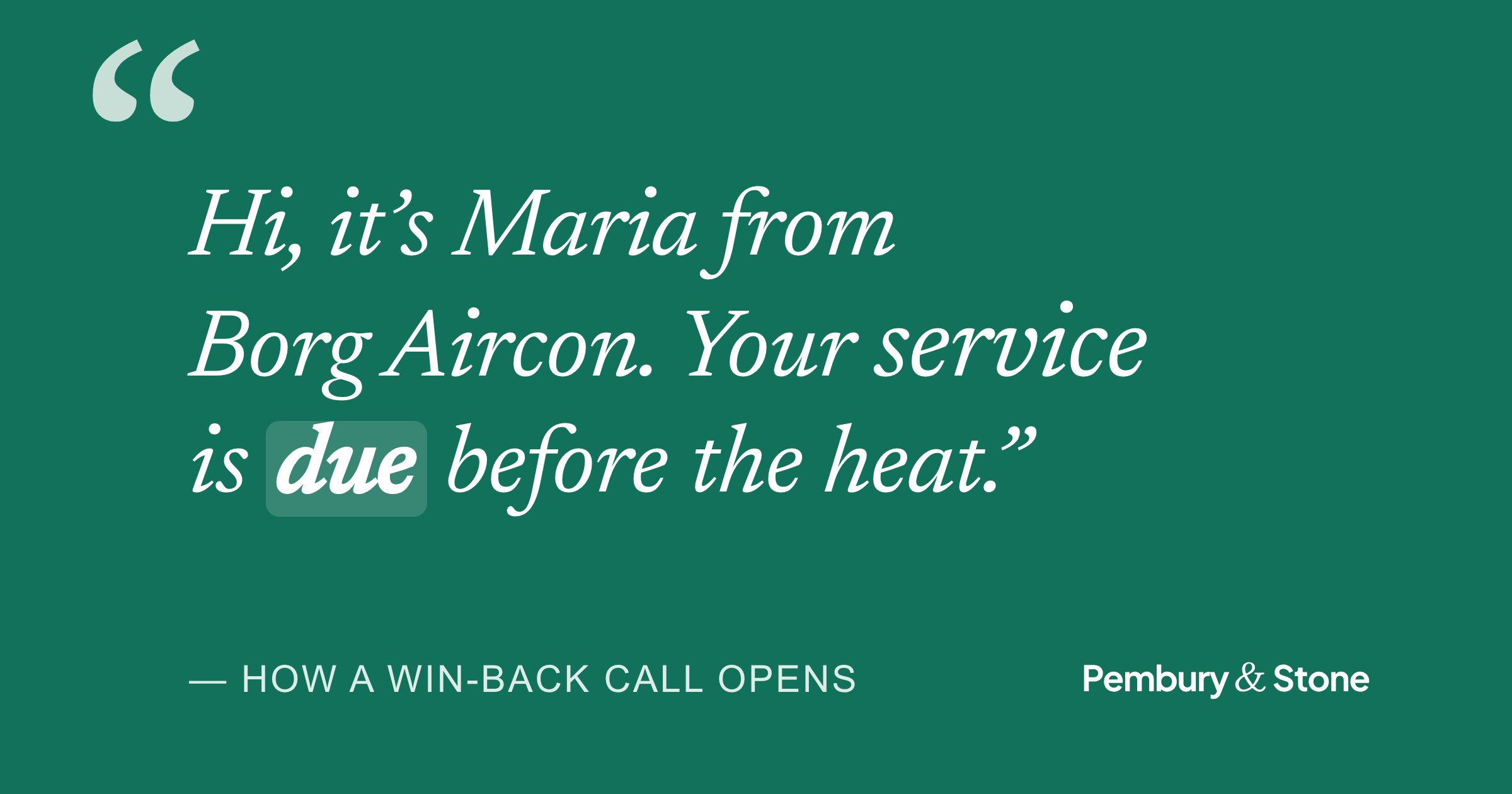
- Something is due. “Your aircon service is a year old this month.” “You're due your hygienist visit.” This is the strongest reason, because it is about them, not you.
- A season is coming. Roofs before the rains, aircon before the summer, pools before Easter, stock before the tourist season. In Malta the calendar does a lot of the selling for you.
- Something is new. A new service, a new product line, a new clinician, longer opening hours. Only if it is genuinely relevant to what they bought.
- There is a free slot. “We have a gap next Tuesday in your area.” Honest, specific and easy to say yes to.
- You want to put something right. If the last job had a problem, say so and offer to fix it. Customers who left over service can be the best ones to win back.
- A check-in with a purpose. For B2B accounts: “We're planning next season's stock. What will you need?”
How to win back customers: what to say on the call
Call first if you can. A call can handle the “not now” and the “we went elsewhere” that a message cannot. Keep it short. Say who you are, give the reason, offer one easy next step, and make it easy to say no.
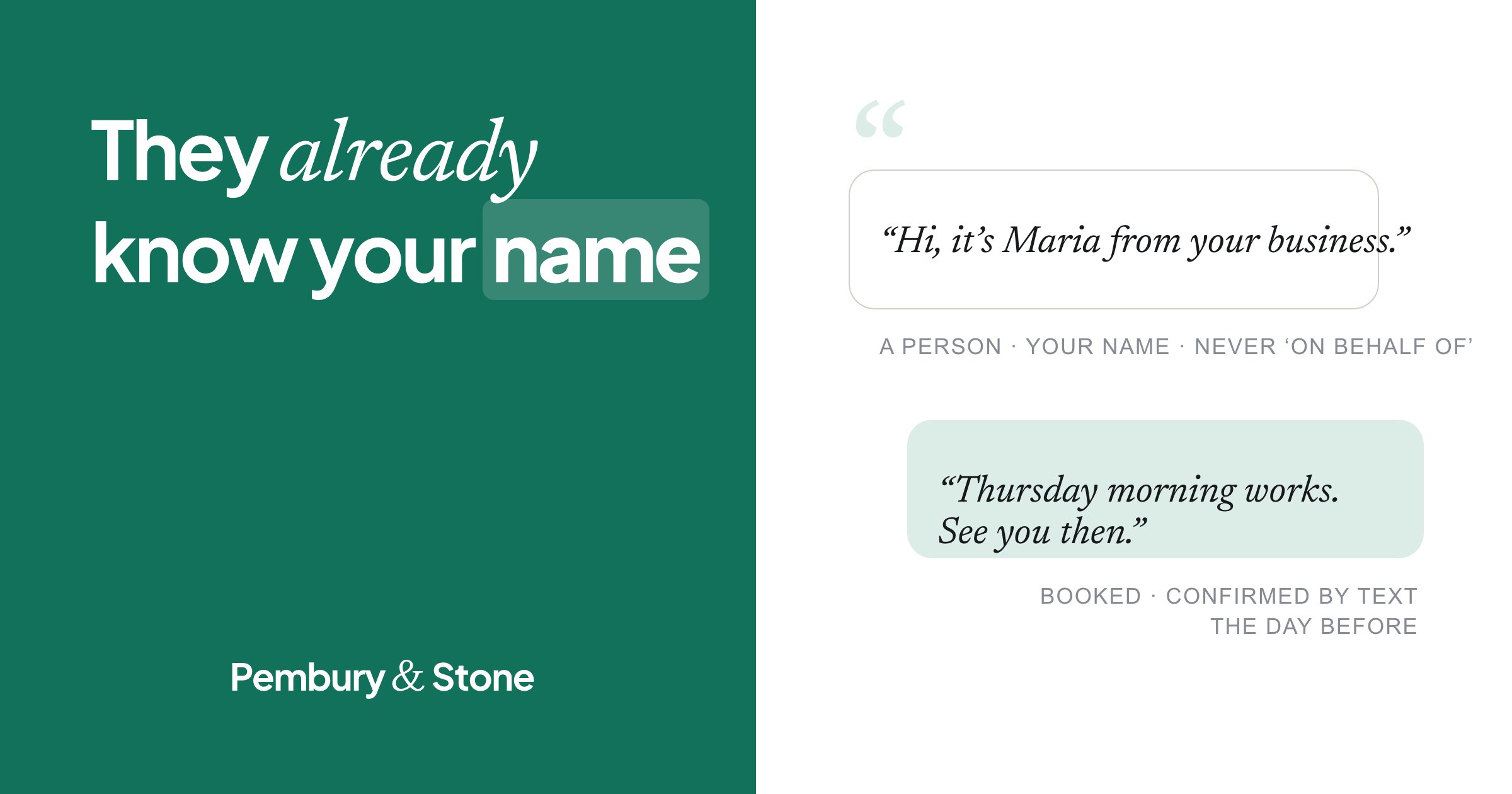
A good opening sounds like this: “Hi, it's Maria from Borg Aircon in Mosta. We serviced your units last June, and they're due again before the heat. Would you like me to book you in? And if you'd rather we didn't call about this, just say.”
Then listen. Most answers are one of these.
- “Yes, book it.” Book it on the call. Confirm by message the same day.
- “Not now.” Ask when would be better, and put that date in the diary. “Try me after the summer” is a perfectly good answer.
- “We went with someone else.” Thank them, and ask one question: “Can I ask what made you switch?” Write the answer down. It is the most useful thing you will hear all week.
- “Please don't call again.” Apologise, confirm you won't, and take them off every list that day.
When the customer left unhappy
Say it before they do. “Last time the installer turned up late twice. I'm sorry about that. We've changed how we book, and I'd like the chance to do it properly.” An apology with a change behind it is the only win-back offer that works here. If they still say no, thank them and leave it.
We switched because the other lot answered the phone. That's all it was.
What to say in a message
Use a message when you cannot get through, or when the customer always preferred to write. Three lines: who you are, the reason, one question. Then the way out. For example: “Hi Joseph, it's Maria from Borg Aircon. Your units are due their yearly service before the summer. Shall I find you a slot? Reply STOP and we won't message about this again.”
Send one message, then a call a few days later if there is no reply. Do not send the same words on two channels on the same day. For the rhythm after that, the same principles as our four-touch follow-up cadence apply, only slower: one touch a month at most for a past customer.
Win-back campaigns in Malta: the rules in brief
Contacting your own customers is easier, legally, than contacting strangers. It is not a free-for-all. This is a plain summary, not legal advice.
Email and SMS to your own customers. Regulation 9(2) of S.L. 586.01 allows the soft opt-in: you may email or text people whose details you got in a sale, about your own similar products or services, if they had an easy, free way to object when you took their details and in every single message. Treat WhatsApp the same way.
Live calls. Under regulation 9(3), you must stop when the person asks. The IDPC expects those requests to be fully respected, usually through an exclusion list (IDPC, Direct Marketing).
The right to object. Under Article 21 of the GDPR, anyone can object to direct marketing at any time, and their data must then no longer be used for it. People must be told of that right at the latest at the first communication.
For the detail, channel by channel, read our guide to cold calling in Malta. Our own rules sit above the law: we always say who we call for, no AI voice on any call that sells, one “stop” ends it on every channel, call windows of nine to one and four to seven, never on a Sunday, and customer data stays in the EU.
A simple monthly customer reactivation routine
Win-back works as a habit, not a one-off when work is slow. This routine takes two or three hours a month.
- First Monday: refresh the list. Add anyone newly past their cycle. Remove anyone who bought again or said stop.
- Pick this month's reason. The season, a service due, a free week in the diary.
- Call the top twenty. Best customers first, in the call windows. Log every outcome.
- Message the ones you could not reach. Three lines and a way to stop. Call again a few days later.
- Book what you can, date the rest. Every “not now” gets a date. Every “went elsewhere” gets its reason written down.
- Last Friday: read the log. Reached, booked, and why people left. Fix the most common reason first.
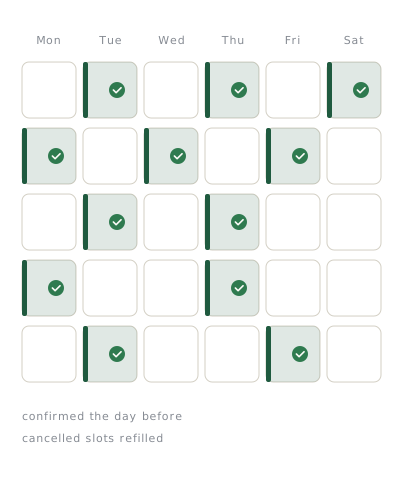
How to measure a win-back campaign
Keep it to four numbers a month: lapsed customers tried, reached, booked, and how many of those bought again months later. The last one tells you whether you won them back or just won one sale.
Keep a fifth list in words: the reasons people gave for leaving. The reasons are worth more than the bookings. Reichheld and Sasser made the same point in 1990: listening to why customers defect shows you exactly where the business falls short.
Put the numbers on one page with the rest of your sales. Our post on the Monday number shows how, and the free Monday Number template is a place to start.
Mistakes to avoid when winning back customers
Most failures look alike.
- Opening with a discount. It teaches customers to leave and wait for the offer, and discount-led returners leave again soonest.
- Saying “just checking in”. No reason, no answer.
- Blasting the whole list at once. Twenty good calls beat two hundred unread messages.
- Messaging without a way to stop. It breaks the soft opt-in.
- Forgetting who said stop. One list, checked before every call and message.
- Doing it once. One push in a slow month, then nothing for a year.
Do it yourself, or hand it over
If you have a list, a reason and two hours a month, do it yourself, starting this week. Pull last year's invoices, pick twenty names, and make the calls in the morning window.
If the calls keep losing to the work, that is what our desk does. A person in Malta builds the list from your invoices and diary, calls your past customers in your name with a real reason, books them into your diary and logs every answer, including why people left. See how customer reactivation works.
Either way, the people who already know you are the easiest people to sell to. If you would rather someone else rang them, talk to our sales team.
Questions owners ask
How do you win back customers who have stopped buying?+
Find them in your invoices, diary and chats, then call with a reason they care about, such as a service that is due or a season coming. Say who you are, offer one easy next step, and make it easy to say no. Lead with better service rather than a discount.
When does a customer count as lapsed?+
When they are past their own normal time to buy again. For an annual service, that is a missed year. For a salon, it may be a few weeks past their usual visit. Work out your normal cycle first, then add a margin.
Is it cheaper to win back a customer than to find a new one?+
Usually, because a past customer already knows you and the first sale has been paid for. Reichheld and Sasser's 1990 study found large profit gains from keeping customers, in big US service firms. The popular “five to 25 times” figure has no traceable study behind it.
Should a win-back campaign offer a discount?+
Not as the opening. In a study of more than 53,000 lost telecom customers, discount-led offers brought the most people back, but they left again soonest and spent least. A better service won fewer back, but they stayed longest.
Can I message past customers in Malta without fresh consent?+
Often yes, under the soft opt-in in regulation 9(2) of S.L. 586.01: your own customers, details taken during a sale, your own similar products, and an easy way to object when you took their details and in every message. Stop as soon as anyone asks. This is general information, not legal advice.
What should I say when calling an old customer?+
Your name, your business, and the reason: “Hi, it's Maria from Borg Aircon. Your service is due before the summer. Shall I book you in?” Then listen. If they say not now, ask when, and put the date in the diary.
- Zero Defections: Quality Comes to Services (Reichheld and Sasser), abstract, Harvard Business Review (via PubMed) (1990).
- E-Loyalty: Your Secret Weapon on the Web (Reichheld and Schefter), Harvard Business Review / Bain & Company (2000).
- Prescription for cutting costs: loyal relationships (Reichheld), Bain & Company (2001).
- The Value of Keeping the Right Customers (Gallo), Harvard Business Review (2014).
- Regaining “Lost” Customers: The Predictive Power of First-Lifetime Behavior, the Reason for Defection, and the Nature of the Win-Back Offer (Kumar, Bhagwat and Zhang), Journal of Marketing (2015).
- Winning Back Lost Customers (Kumar, Bhagwat and Zhang), Harvard Business Review (2016).
- Dental checks: intervals between oral health reviews (CG19), Recommendations, NICE (2004).
- Processing of Personal Data (Electronic Communications Sector) Regulations, S.L. 586.01, Laws of Malta (2013).
- Direct Marketing, Information and Data Protection Commissioner.
- Regulation (EU) 2016/679 (GDPR), Article 21, EUR-Lex (2016).
- BlogWhatsApp Business for Sales: A Practical Guide for Malta
- BlogWhat Is a Sales Pipeline? A Plain Guide for Small Businesses in Malta
- ServiceCustomer reactivation: past customers called with a reason to return
- ServiceLead follow-up: every quote chased until there is an answer
- ServiceWhatsApp sales: your business number, answered by a person
- ServiceSales pipeline management: every lead worked until it closes