What Is a Sales Pipeline? A Plain Guide for Small Businesses in Malta
What is a sales pipeline? A plain guide for small businesses in Malta: the six stages, worked examples, how to keep one, and the numbers to watch weekly.
A call comes in while you are on a ladder. A WhatsApp arrives at nine at night with a photo and “can you do this?”. An email asks for a price. A web form sits unread until Saturday. By Monday you have a handful of people who wanted something from you, and no clear idea where any of them stand.
That is the problem a pipeline solves. So, what is a sales pipeline? It is a simple list of everyone who might buy from you, sorted by how far along they are, with the next step written next to each name. This guide explains it in plain words for an owner-run business in Malta: the stages that fit a trade, a clinic or an agency, two worked examples, how to keep one with a notebook, a spreadsheet or a CRM, the few numbers to check every week, and the mistakes to avoid.
What is a sales pipeline, in plain words?
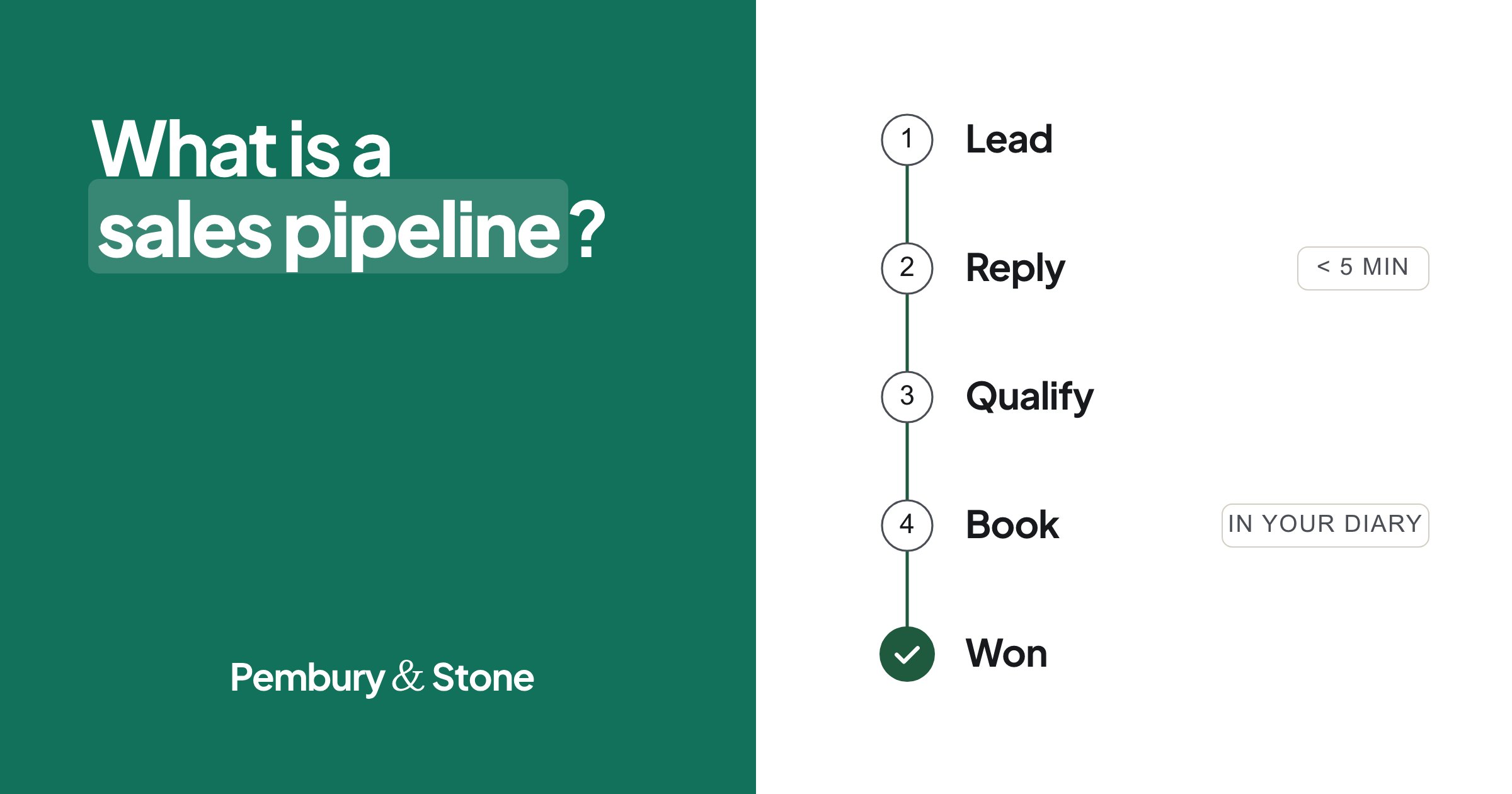
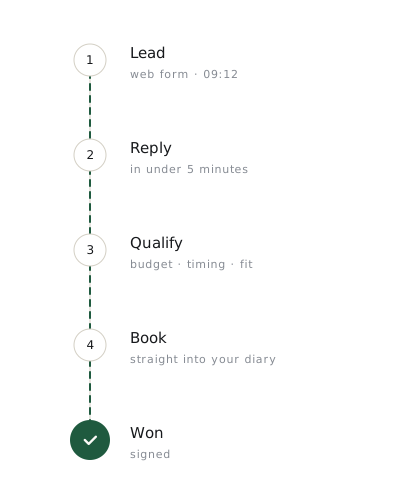
A sales pipeline is every open enquiry you have, in one place, each one marked with the stage it has reached and the next thing that needs to happen. Think of it as a row of boxes from left to right. A new enquiry goes in the first box. As you reply, ask questions, quote and follow up, it moves right. It leaves the pipeline at the end, as won or lost.
Three things make a list into a pipeline. Every lead has a stage. Every lead has a next step with a date. And every lead that leaves has an outcome: won, or lost with a reason. Without those three, you have a pile of messages. With them, you can see at a glance who needs a call today and which jobs are about to slip away.
The big software firms describe it the same way, only with more jargon: a visual map of where each prospect is in the buying process, from first contact to a closed deal. You do not need their software to run one. You need the habit.
Pipeline or funnel: what is the difference?
People mix the two words up. A funnel counts: fifty enquiries came in, thirty were real, twelve were quoted, seven were won. It shows how numbers shrink at each stage. A pipeline is the working list behind those numbers: Maria in Mosta, quoted on Tuesday, call her Friday. The funnel tells you how you did. The pipeline tells you what to do next. A small business needs the pipeline first. The funnel falls out of it.
Why a sales pipeline matters for a small business
Most businesses in Malta are small and run by the person who does the work. Of the 60,856 active enterprises the NSO counted in 2024, 73.2% were sole traders and partnerships (NSO, Business Demography 2024). In those businesses, the person who should chase a quote is the same person fitting the kitchen or seeing the patient. Nothing is written down, so things slip.
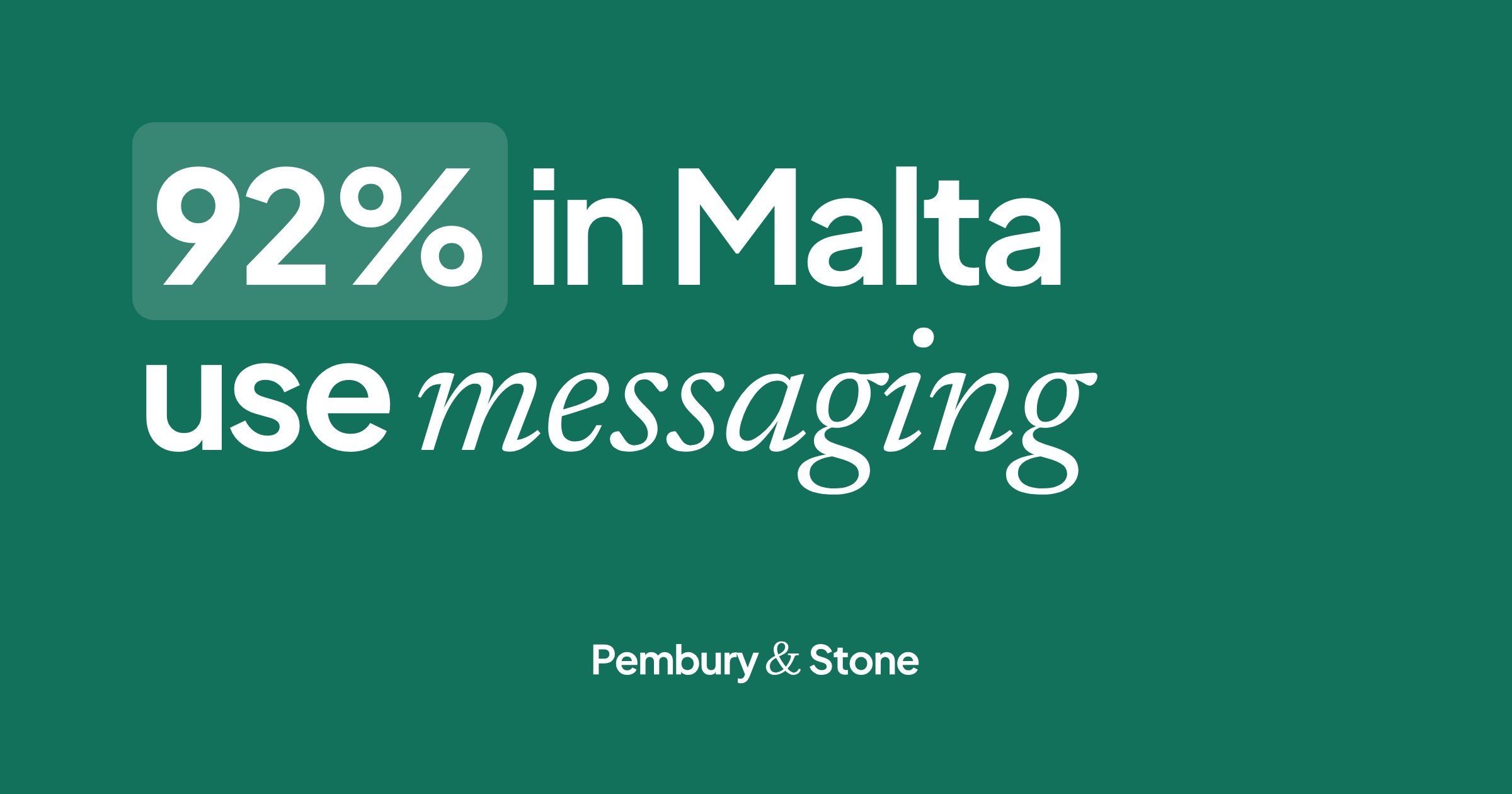
Enquiries also arrive from everywhere at once. In 2025, 92% of people in Malta aged 16 to 74 used instant messaging, against 82% across the EU (Eurostat, internet activities of individuals). Add phone calls, email and web forms, and a single enquiry can live in four apps. A pipeline pulls them into one list.
Is there evidence that a pipeline helps? The best-known study is about larger firms, so read it with care. Vantage Point Performance and the Sales Management Association surveyed 62 business-to-business companies, most of them big. Firms that had defined a formal sales process showed an 18% difference in revenue growth over those that had not, and firms whose managers spent at least three hours a month on each salesperson's pipeline grew revenue 11% faster (Jordan and Kelly, Harvard Business Review, 2015). It is a survey, not a controlled trial. But the lesson carries over to a five-person firm: define the steps, then look at the list regularly.
Sales pipeline stages for a small business
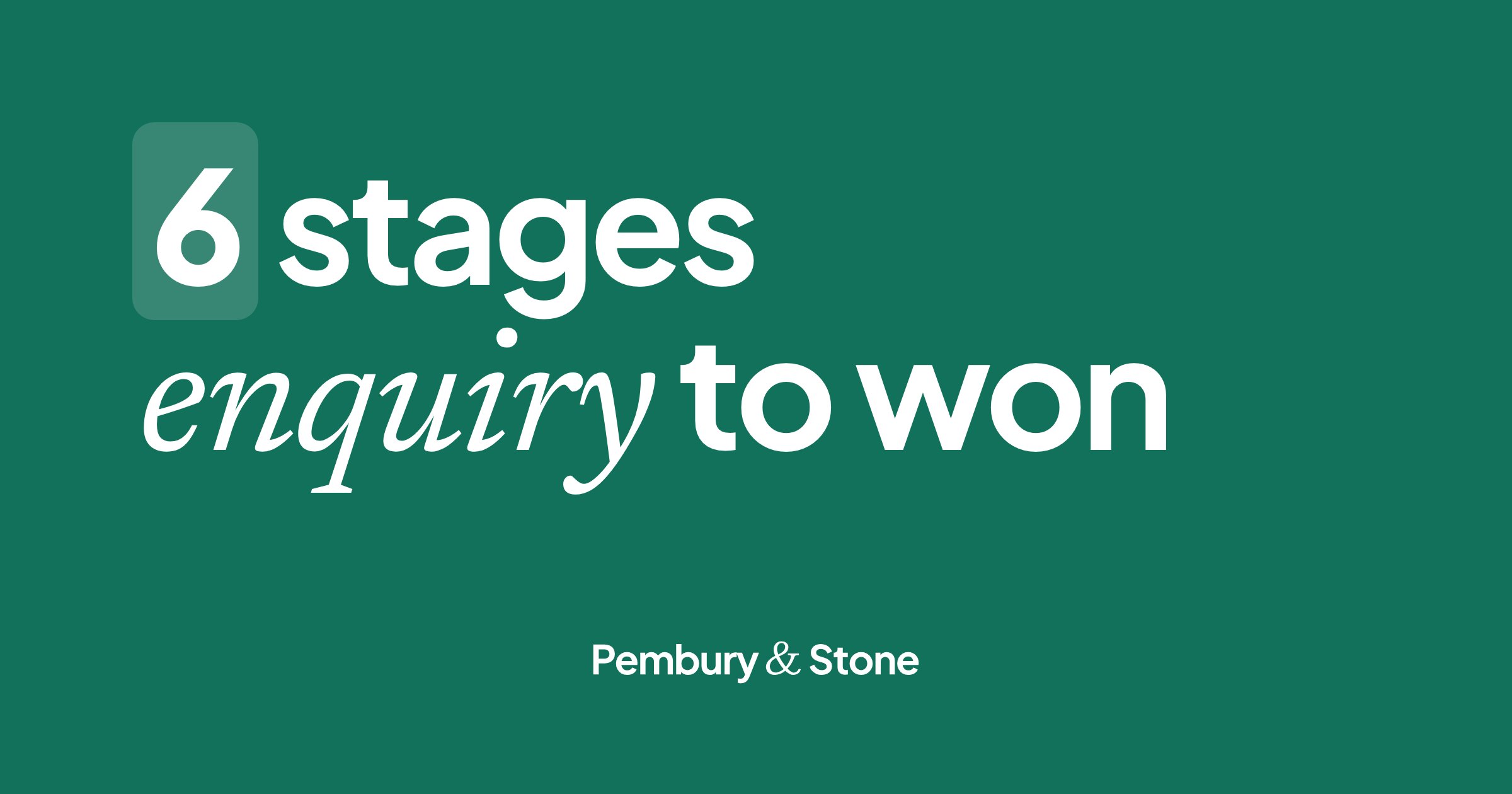
Big companies use eight or ten stages with names like “marketing qualified”. You need six, named for what actually happens. These are the stages we use on our own desk.
- Enquiry. Someone has asked. Phone, WhatsApp, email, web form or a walk-in. Write it down the moment it arrives, with the channel.
- Replied. You have answered them, on the same channel they used. Note the time. Speed matters most here: firms that tried to contact a web enquiry within an hour were nearly seven times as likely to qualify it as firms that waited longer (HBR, 2011).
- Qualified. You know it is a real job you want: what they need, roughly when, and where. Three questions usually do it.
- Quoted or booked. A price has gone out, or a visit, consultation or meeting is in the diary.
- Followed up. You have chased the quote or confirmed the booking, on a set rhythm, until there is an answer.
- Won or lost, with a reason. The job is yours, or it is not. If it is lost, write why, in the customer's words.
Every lead needs a next step and a date
The stage tells you where a lead is. The next step tells you what to do about it. “Call Thursday about the start date” is a next step. “Waiting” is not. If a lead has no next step and no date, it is not in your pipeline. It is in a drawer, and drawers do not ring back.
A good rule: nobody leaves a stage without a date for the next touch. For quotes, a simple rhythm works: a message on day two, a call on day five, a message on day nine, a call on day fourteen. Our follow-up message generator writes the words for each one.
Lost is a stage too, and it needs a reason
Most owners only remember the wins. The losses teach more. Keep the reasons short and in the customer's words: “went with someone cheaper”, “needed it this week”, “decided not to do it”, “never got back to me”. After a month, a pattern shows. If most losses say “never got back to me”, you do not have a price problem. You have a follow-up problem.
Sales pipeline examples: a trade and a clinic
Here is how the same six stages look in two very different businesses. Names and places are made up, but the shape is real.
Found someone closer.
A trade: a tiling business in the north
Joseph runs a tiling firm with two staff. On Monday morning, his pipeline has eight lines.
- Enquiry: a web form from Naxxar, a balcony. Arrived Sunday night. Next step: call at nine.
- Replied: a WhatsApp from St Paul's Bay, a shower. Answered Saturday with two questions. Next step: wait for photos, chase Tuesday.
- Qualified: a kitchen splashback in Mosta. Size, tile choice and timing known. Next step: site visit Wednesday at four.
- Quoted: two bathrooms. One sent Thursday, one sent last Monday. Next steps: a message to one on Saturday, a call to the other today.
- Followed up: a terrace in Mellieħa, on day nine. Next step: send a photo of a similar terrace and offer a slot in November.
- Won: a hallway in Attard. Lost: a stairway in Gozo, “found someone closer”.
A clinic: a physiotherapy practice
A clinic's pipeline is shorter, because the “quote” is usually a first appointment. The stages still fit. An enquiry is a call or a message asking about back pain. Replied means someone answered and offered two slots. Qualified means you know it is something you treat and whether they are paying themselves or claiming on insurance. Booked means a first appointment is in the diary and confirmed. Followed up means a reminder the day before and, if they cancel, a call to rebook. Won is the first visit attended. Lost has a reason: “booked elsewhere”, “pain went away”, “no reply”.
One clinic rule matters. Keep the pipeline to contact details, the service asked about and the next step. Medical details belong in the patient record, not in a sales list. Our page on clinics in Malta covers how we handle the front desk for practices.
How to manage a sales pipeline: notebook, spreadsheet or CRM
The best tool is the one you will open every day. Start with the simplest one that holds a stage, a next step and a date for every lead. Move up only when it stops coping.
A pipeline is a habit before it is a tool.
A notebook or a whiteboard
Fine for up to about fifteen live leads and one person. Draw six columns, one per stage. Each lead is a line: name, number, channel, job, next step, date. Cross out and rewrite as it moves. The weakness is that only one person can see it, and it does not remind you of anything. Check it at the same time every day, before the first job.
A shared spreadsheet
The next step up, and enough for many small firms for years. One row per lead. Columns: date in, name, phone, channel, what they want, stage, next step, next date, value if you know it, outcome, reason. Sort by next date each morning, and the top of the sheet is your to-do list. Share it with whoever answers the phone, so a lead taken by your partner does not vanish.
A CRM
A CRM (customer relationship management software) is a spreadsheet that reminds you, logs calls and messages, and draws the pipeline as columns you drag leads across. It is worth it when several people handle leads, or when you have more than you can sort by eye. Malta's firms are ahead of the EU average here: in 2025, 35% of Maltese enterprises with 10 to 49 staff used CRM software, against 25% across the EU (Eurostat, e-business integration). Those figures only cover firms with ten or more people, so most owner-run businesses are not counted at all.
A word of warning. A CRM does not follow anyone up. It only shows you who you forgot. If nobody opens it, it is a more expensive notebook.
The sales pipeline numbers to watch every week
Do not track twenty things. Once a week, write down these seven. They fit on one page and take ten minutes.
- Leads in, by channel. Phone, WhatsApp, email, web form. Tells you where work comes from.
- Replied, and how fast. The usual time and the worst case.
- Qualified. How many were real jobs you wanted.
- Quoted or booked. How many reached a price or a diary slot.
- Won and lost. Count both. A lost with a reason is useful. A lead that just went quiet is not.
- Open with no next date. This should be zero. If it is not, those are the leads you are losing without knowing.
- The loss reasons. Read them in a row. The pattern is the lesson.
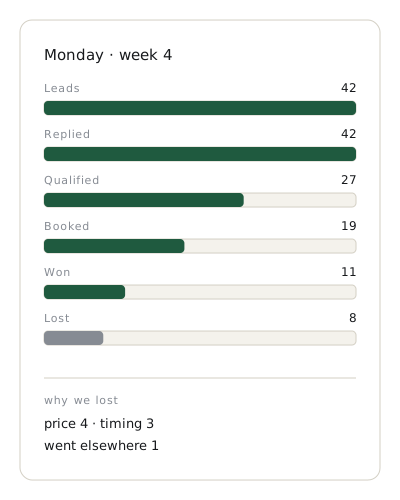
Make it a Monday habit
We call this the Monday Number. One page, every Monday, before the week starts. After four weeks you will know your win rate, your best channel and your main reason for losing work. You can start with our free Monday Number template. If your usual reply takes hours rather than minutes, the speed-to-lead benchmark shows what that delay is likely to cost.
Common sales pipeline mistakes
Most pipelines fail in the same few ways. None of them is about software.
Close the dead leads, with a reason, so the live ones can be seen.
- Leads that never get in. The call taken on site, the WhatsApp read in traffic. If it is not written down within the hour, it is not in the pipeline. When researchers sent test enquiries to 2,241 US firms, 23% never replied at all (HBR, 2011).
- One touch, then silence. In a study of about 3.5 million sales leads, half were only ever called once (Velocify data, via the National Law Review). A quote with no follow-up date is a quote you have given up on.
- “Waiting” as a next step. Every lead needs an action and a date, even if the action is “call in March”.
- Never closing anything as lost. A pipeline full of dead leads looks busy and hides the live ones. If there is no answer after the last follow-up, mark it lost, “no reply”, and set a date to try again in a few months.
- Too many stages. If you cannot say what moves a lead from one stage to the next, merge them.
- Looking at it once a month. A pipeline is a daily list and a weekly report. Monthly is too late to save anything.
Do it yourself, or hand your sales pipeline over?
If you have half an hour a day and the discipline to open the list, run it yourself. A notebook or a spreadsheet, the six stages and the Monday page will win you jobs you are losing today. Most owners who try it are surprised by how many quiet quotes they find in the first week.
If you do not have that half hour, and most owners on the tools do not, that is the work our desk does. We answer enquiries on every channel in your name, qualify them, book them into your diary, chase every quote and keep every lead on a stage with a next step and a date. You get the Monday Number every week. See what sales pipeline management covers, or read how outsourced sales works, step by step.
A few rules we keep on every account. We always say who we call for. No AI voice on any call that sells. One “stop” ends it. We call between nine and one and between four and seven, never on a Sunday. Customer data stays in the EU. And we take one business per trade, per town, so we never work for your competitor down the road. Setup takes two to five days.
Either way, write today's leads down before you close this page. If you would rather someone else kept the list moving, talk to our sales team.
Questions owners ask
What is a sales pipeline in simple terms?+
It is a list of everyone who might buy from you, sorted by how far along they are, with the next step and a date next to each name. Leads move from enquiry to won or lost. It tells you who to call today.
What are the stages of a sales pipeline?+
For a small business, six are enough: enquiry, replied, qualified, quoted or booked, followed up, and won or lost with a reason. Name your stages after what actually happens in your business. If you cannot say what moves a lead from one stage to the next, merge the two.
What is the difference between a sales pipeline and a sales funnel?+
A funnel counts how many leads reach each stage, so it shows how you did. A pipeline is the working list of individual leads and their next steps, so it shows what to do next. Keep the pipeline and the funnel numbers follow.
Do I need a CRM to have a sales pipeline?+
No. A notebook works for a handful of leads and a shared spreadsheet works for many small firms. A CRM helps when several people handle leads or you have too many to sort by eye. Any tool works only if someone opens it every day.
How often should I review my sales pipeline?+
Look at the next steps every morning and do a short review once a week. A weekly one-page report with leads in, replied, booked, won, lost and the reasons is enough for most owner-run businesses.
Can someone manage my sales pipeline for me?+
Yes. An outsourced sales desk can answer your enquiries, chase quotes and keep every lead moving in your name, then report weekly. Ours is in Malta and goes live in two to five days.
- Companies with a Formal Sales Process Generate More Revenue (Jordan and Kelly; Vantage Point Performance and Sales Management Association survey), Harvard Business Review (2015).
- Enterprises using CRM software, by size class (isoc_eb_iip), Eurostat (2026).
- Individuals: internet activities, instant messaging (isoc_ci_ac_i), Eurostat (2026).
- Business Demography: 2024 (NR 218/2025), National Statistics Office Malta (2025).
- The Short Life of Online Sales Leads (Oldroyd, McElheran and Elkington), Harvard Business Review (2011).
- Study Reveals Best Contact Strategies for Optimal Lead Conversion (Velocify data), National Law Review (2016).
- BlogWhatsApp Business for Sales: A Practical Guide for Malta
- BlogVirtual Receptionist Malta or a Sales Desk: Who Should Answer Enquiries?
- ServiceSales pipeline management: every lead worked until it closes
- GuideHow outsourced sales works, step by step
- ServiceLead follow-up: every quote chased until there is an answer
- ServiceThe sales front for clinics in Malta