Virtual Receptionist Malta or a Sales Desk: Who Should Answer Enquiries?
Virtual receptionist Malta guide: what an answering service, an AI receptionist and a sales desk each do, who each suits, and what to ask before you sign.
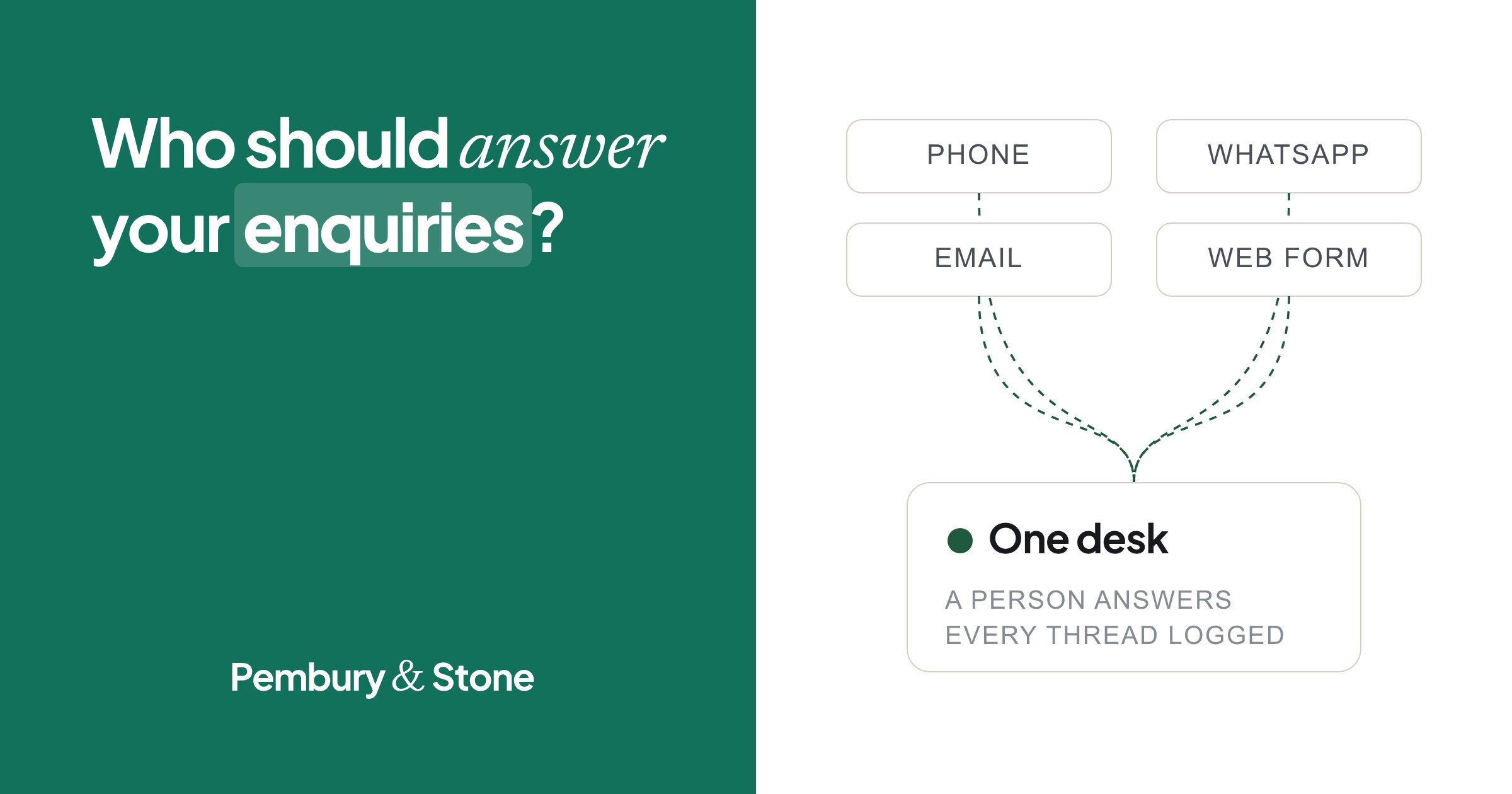
The phone rings while you are on a ladder in Naxxar. A WhatsApp comes in while you are with a patient. An email asks for a price at ten at night. Somebody has to answer them, and it is usually you, later.
So owners start looking for help. Search for a virtual receptionist Malta and you find answering services, virtual offices, AI voice bots and outsourced sales desks, all promising that no call goes unanswered. They are not the same thing. This guide sets out what each option does and does not do, who each one suits, and the questions to ask any provider before you hand over your number.
Who should answer the phone in a small business?
Start with the job, not the person. An enquiry is someone asking to buy. The job is to answer it fast, find out what they need, and move it to a booking, a visit or a quote. Taking a message is only the first step of that job.
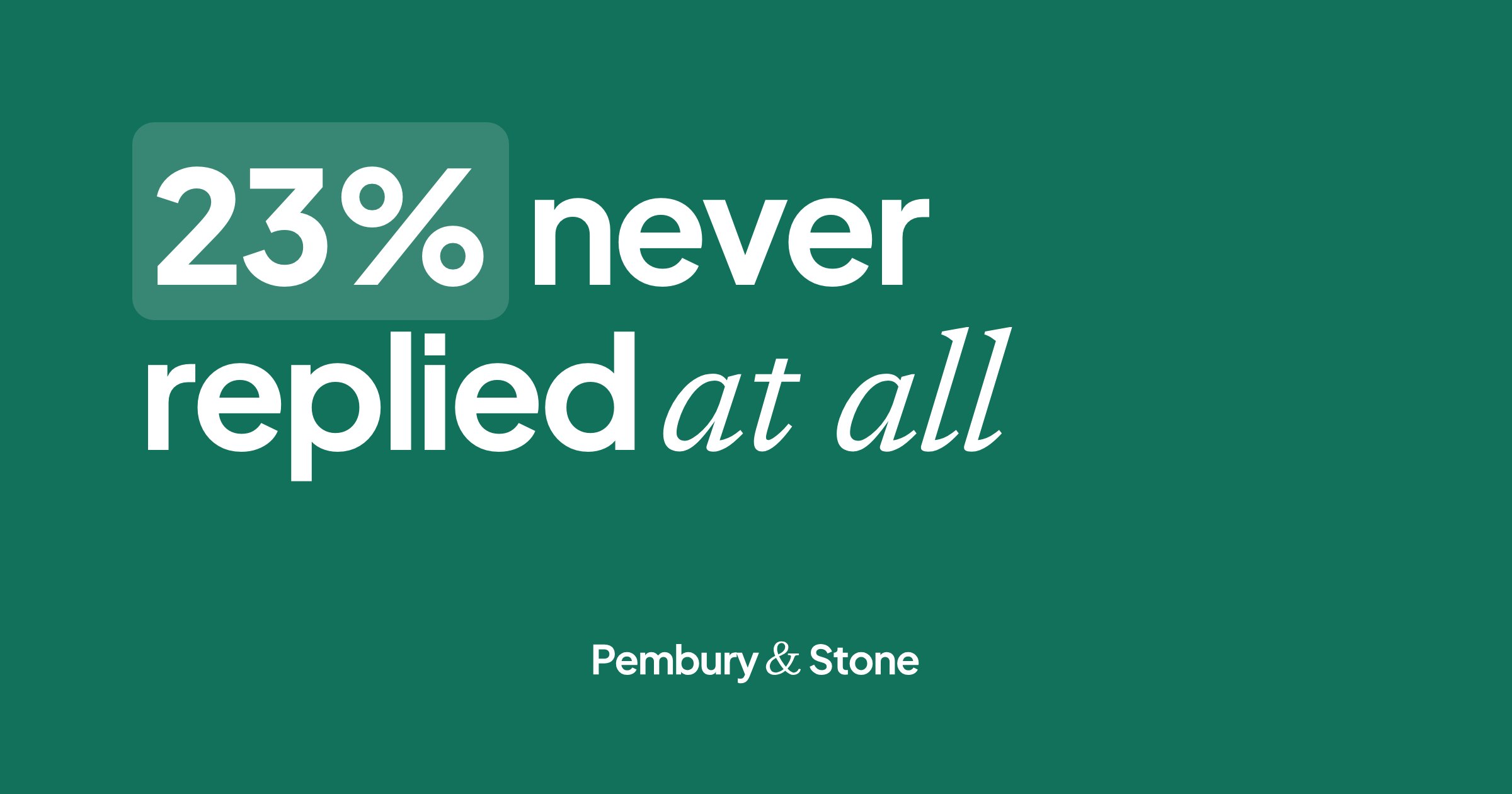
Speed matters more than most owners think. When researchers sent test enquiries to 2,241 US companies, 23% never replied at all, and the average first reply took 42 hours (Harvard Business Review, 2011). The same study found that firms which tried to reach an enquiry within an hour were nearly seven times as likely to qualify it as firms that waited longer.
In Malta the problem is built into how businesses are run. Of the 60,856 active enterprises the NSO counted in 2024, 73.2% were sole traders and partnerships (NSO, Business Demography 2024). In most of them, the person who answers the phone is also the person who does the work. You can test your own reply times with our free speed-to-lead benchmark.
Your options for answering enquiries in Malta
There are six realistic ways to cover your phone, WhatsApp and inbox. Most businesses use two or three of them at different hours. Here is what each one actually does.
Doing it yourself
You know the work, the prices and the customers better than anyone. When you answer, the caller gets the real answer. That is a big advantage, and many small businesses should keep it for part of the day.
The cost is hidden. Every call you take on a job slows the job down, and every call you miss goes to voicemail, where many people simply ring the next name on the list. Evenings go on WhatsApp replies. Quotes wait until the weekend.
A family member or a member of staff
This is how most Maltese businesses cope. A partner answers from home, or whoever is in the office picks up. It is cheap, trusted and flexible.
It works while it is someone's actual job. It breaks when answering is a favour fitted around other work. Messages end up on scraps of paper, nobody owns the follow-up, and nobody knows how many enquiries came in last week.
An in-house receptionist
A receptionist on your payroll knows your business, your diary and your regulars. For a clinic, a salon or an office with steady walk-in traffic, one good person at the front desk is hard to beat.
The limits are hours and cover. One person covers one shift, needs holidays and sick days, and is often busy with the person standing in front of them when the phone rings. A receptionist is rarely asked to chase quotes or call back last month's enquiries. We compare hiring with outsourcing in more depth in in-house vs outsourced sales.
A virtual receptionist or call answering service
A virtual receptionist answers your calls from somewhere else, usually in your business name. They take a message, put urgent calls through to you, and sometimes book appointments into a shared diary. In Malta, many virtual office providers bundle this with a business address and mail handling.
For a lot of businesses this is the right answer. If most of your calls are from existing clients, suppliers or people who just need you to ring back, a message-taking service does the job well. It is simple to set up and it stops the phone ringing out.
What it usually does not do is sell. The receptionist does not know your prices, cannot qualify a job, does not chase the quote, and does not tell you at the end of the week how many enquiries turned into work. You still get a list of messages, and you still have to call them all back.
An AI receptionist or voice bot
An AI receptionist is software that picks up the phone and talks. It can answer common questions from information you give it, take details and book slots, at any hour, many calls at once. For opening hours, directions and booking confirmations it can be useful.
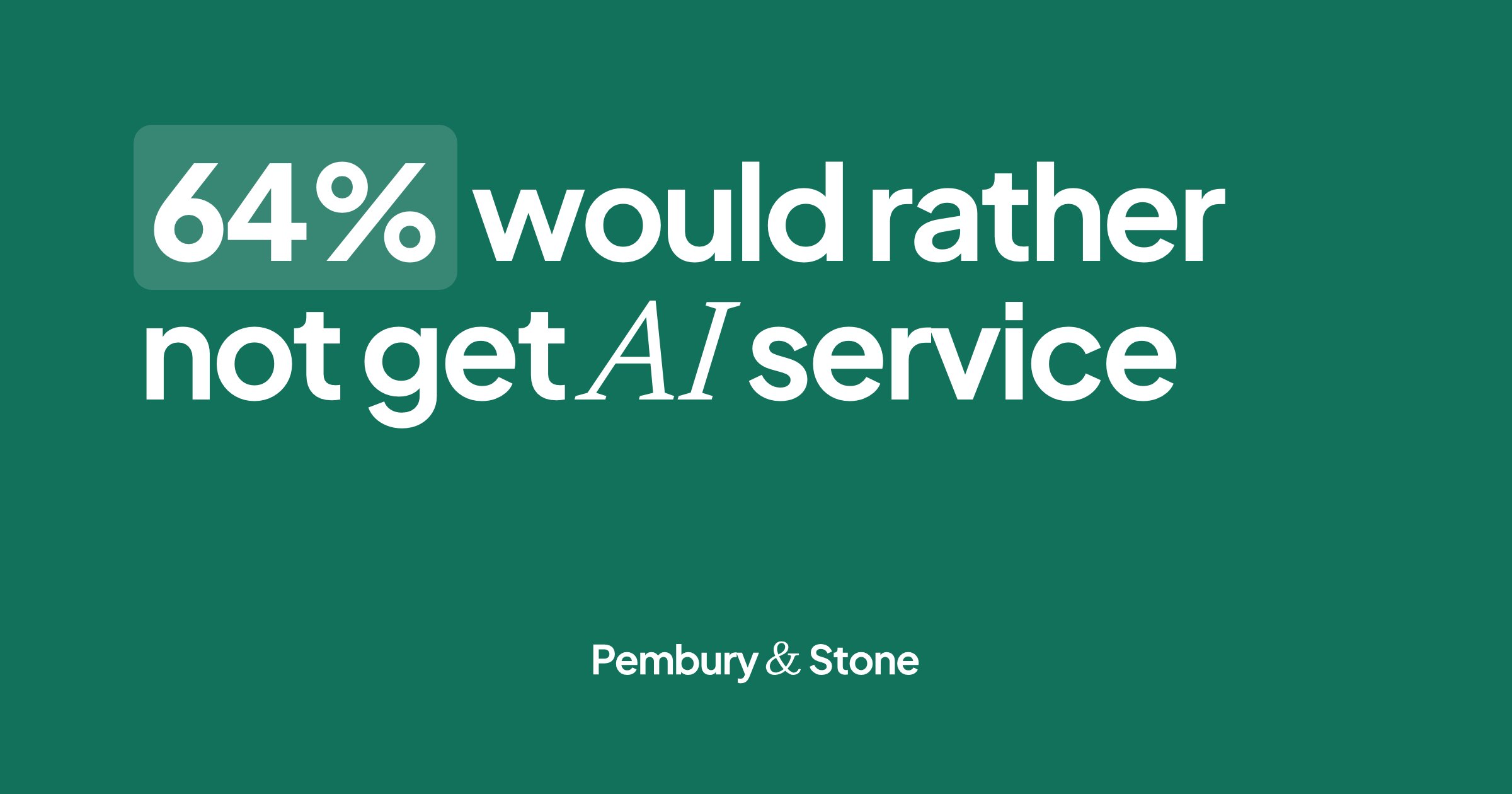
Customers are wary of it. In a Gartner survey of 5,728 customers, 64% said they would prefer companies did not use AI for customer service, and 53% said they would consider switching to a competitor if they found out a company was going to use it. Their top worry was that it would get harder to reach a person (Gartner, 2024).
There is a rule to follow too. Since 2 August 2026, the EU AI Act says people must be told they are dealing with an AI system, at the latest at the first interaction, unless it is obvious (EU AI Act, Article 50). Our own line is simpler: no AI voice on any call that sells. A machine may remind someone of an appointment. Only a person should persuade.
A sales desk
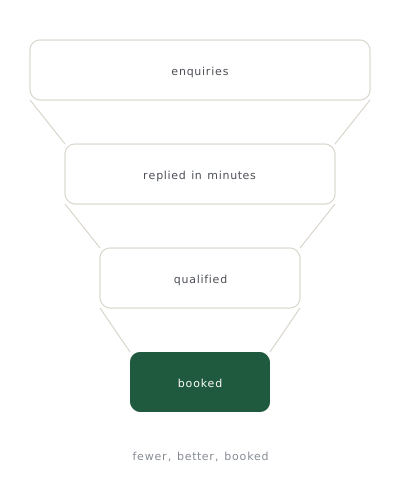
A sales desk answers the same calls, messages and forms, but its job does not stop at the message. It replies in minutes, asks the questions that qualify the job, books the visit or the call into your diary, follows up every quote until there is an answer, and reports the numbers back to you.
That is what we run. Our speed-to-lead service answers every enquiry in your name, from Malta. Because so many Maltese customers start on WhatsApp, we also answer your business number there, as a person, through WhatsApp sales. It is more than most businesses need for supplier calls, and less than you would need for a full sales team. It suits businesses where enquiries turn into paid work and too many of them go cold.
Answering service vs sales desk: the comparison
Put side by side, the six options sort themselves out by one question: does the enquiry come back to you as a message, or as a booked job?
A message is not a booked job.
- You: the best answers, when you can pick up. Misses calls during work and after hours. No record unless you keep one.
- Family or staff: trusted and flexible. Answering is a side job, so follow-up and records slip.
- In-house receptionist: knows the business and the regulars. One shift, one person, rarely chases quotes.
- Virtual receptionist or call answering service: answers in your name, takes messages, puts calls through. Usually does not qualify, book, chase or report.
- AI receptionist: any hour, many calls at once, good for routine questions. Many customers dislike it, it must say it is AI, and it should not sell.
- Sales desk: replies, qualifies, books, follows up and reports, by a person, in your name. More than you need if most calls are routine.
Virtual receptionist Malta: questions to ask any provider
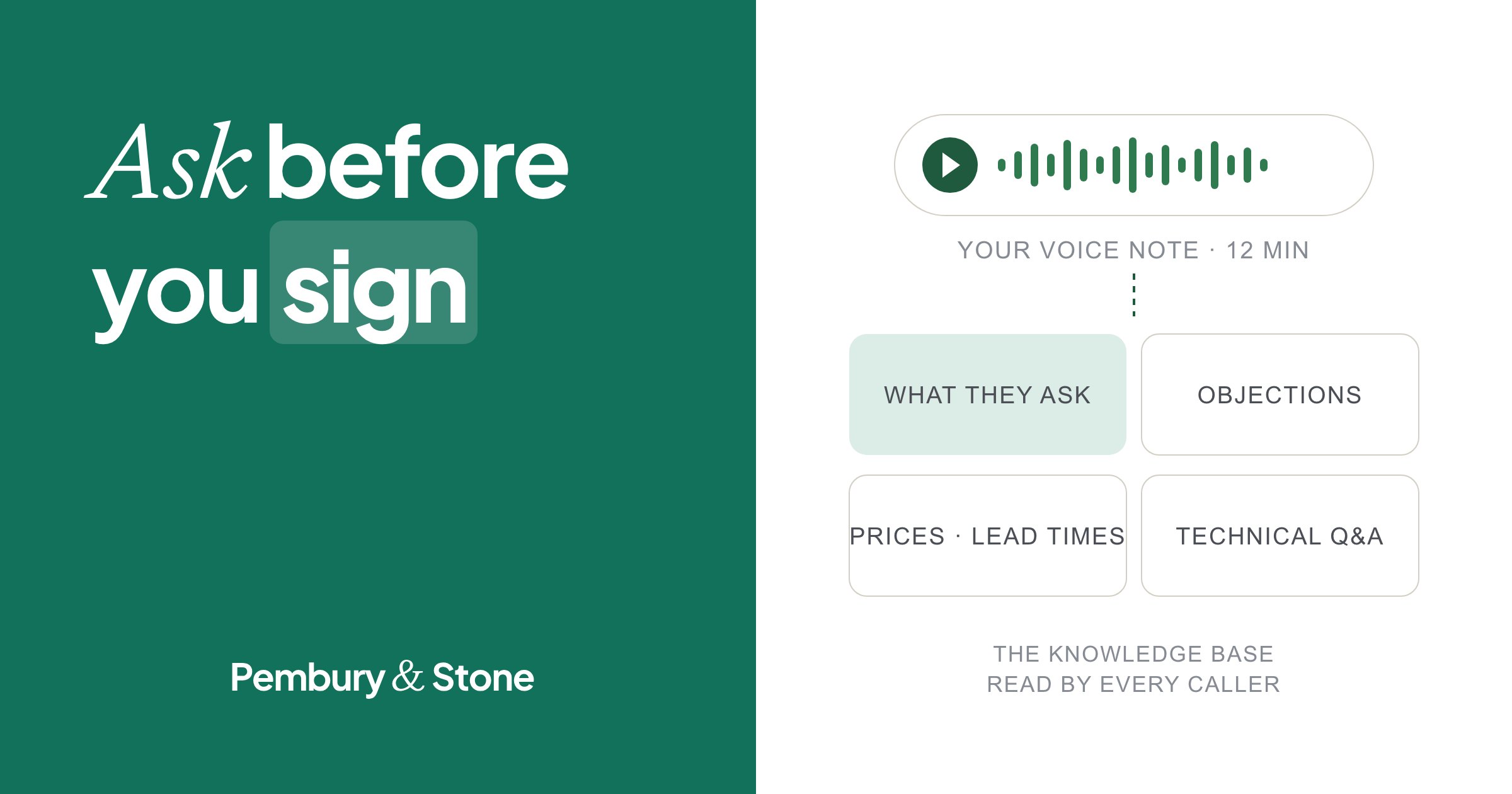
Whichever kind of provider you talk to, ask these before you sign. A good provider will answer every one plainly. For a fuller checklist on outsourcing the selling itself, read what to look out for when outsourcing sales.
Hi, it’s Maria from your business.
Do you answer in English and in Maltese?
Malta is bilingual, and not in a neat way. In the 2021 census, a quarter of Maltese nationals under ten, and almost 15% of those aged 10 to 19, said English was their main language from early childhood (NSO Census 2021, reported by MaltaToday). The census also counted 115,449 non-Maltese nationals among 519,562 residents (NSO Census 2021, reported by Newsbook).
So ask who will answer in Maltese, who in English, and what happens when an older customer from Gozo rings and wants to speak Maltese. A service that answers only in English will lose some callers without you ever knowing.
What hours do you cover, and what happens outside them?
Ask for the exact hours, including weekends and public holidays. Then ask what the caller hears at eight in the evening, and what happens to a WhatsApp message that arrives at midnight. Many enquiries come in when you have stopped working. That is exactly when cover matters.
Whose name do you answer in?
The caller should hear your business name, and the person should say who they are. Vague lines such as “calling on behalf of” or a generic company greeting make customers wary. We always say who we call for: “It’s Maria from your company”, never “on behalf of”.
Where is my customers' data kept, and do you record calls?
Your provider handles your customers' personal data for you, so under the GDPR you need a written agreement that sets out what they may do with it (GDPR, Article 28). Ask where the data is stored, whether it leaves the EU, and whether it is used to train any software.
If calls are recorded, callers must be told before the recording starts. The data protection guidelines for banks published by Malta's IDPC say this applies to outbound calls too, and that recordings should generally not be kept longer than thirty days (IDPC, Data Protection Guidelines for Banks). They were written for banks, but they show how Malta's regulator thinks about call recordings.
Who owns the number?
If the provider gives you a new number and you print it on your van, your website and your business cards, ask what happens to it when you leave. The number your customers call should stay yours. The same goes for your WhatsApp Business account and your customer list.
What happens after the call?
This is the question that separates a receptionist from a sales desk. Does the enquiry arrive as a message, or as a qualified job with a booked slot? Who calls back if the customer does not answer? Who chases the quote? And will you get one page each week that shows how many enquiries came in, how many were answered, and how many were won? Our free Monday Number template shows the kind of report to ask for.
Which option suits your business?
There is no single right answer. It depends on what your calls are, not how many there are.
Is he in today?
- Most calls are routine (existing clients, suppliers, “is he in today?”): a virtual receptionist or call answering service is enough. Keep it simple.
- You have a front desk and steady walk-ins: an in-house receptionist, with outside cover for evenings and busy hours.
- You only need reminders and confirmations: automated messages are fine, as long as people know it is a machine and can reach a person.
- Enquiries turn into paid work, and too many go cold: a sales desk, because the money is in what happens after the first answer.
- You are a sole trader on site all day: answer what you can, and hand the rest to someone who replies in minutes, not hours.
Do it yourself, or hand it to a sales desk
If your phone is quiet enough to answer yourself, do. Set a rule that every enquiry gets a reply within the hour, keep a simple list of who called and what they wanted, and call back anyone you missed the same day. That alone will win work you are losing now.
If the enquiries are mostly routine, a message-taking service is a fair choice and probably all you need. Do not pay for selling you do not need.
If the enquiries are where your money comes from, and they are slipping, that is what we do. Our desk in Malta answers your calls, WhatsApp, forms and email from eight to eight, seven days a week, in your name. Calls we make go out only between nine and one and four and seven, never on a Sunday. One “stop” ends it. Your customers' data stays in the EU. We work with one business per trade, per town, and setup takes two to five days.
Either way, the next enquiry deserves an answer in minutes. Talk to our sales team if you would like us to give it.
Questions owners ask
What does a virtual receptionist do?+
A virtual receptionist answers your calls from another location, usually in your business name. They take messages, put urgent calls through and sometimes book appointments. Most do not qualify enquiries, chase quotes or report on sales.
Is a call answering service worth it for a small business in Malta?+
It is worth it if most of your calls are routine and only need a message or a callback. If your calls are new enquiries that turn into paid work, you need someone who also replies fast, qualifies and follows up, which is what a sales desk does.
Is it legal to use an AI receptionist in Malta?+
Yes, but since 2 August 2026 the EU AI Act requires that people are told they are talking to an AI system, at the latest at the first interaction, unless it is obvious. Personal data from the calls is also covered by the GDPR. We do not use an AI voice on any call that sells.
Should my answering service speak Maltese?+
Yes, ideally both Maltese and English. Many callers prefer Maltese, many younger Maltese grew up with English, and more than one in five residents is not a Maltese national. Ask a provider exactly who answers in which language.
What is the difference between a virtual receptionist and a sales desk?+
A virtual receptionist answers and passes on a message. A sales desk answers, qualifies the enquiry, books the visit or call, follows up every quote until there is an answer, and reports the results each week. See how our speed-to-lead service works.
- The Short Life of Online Sales Leads (Oldroyd, McElheran and Elkington), Harvard Business Review (2011).
- Business Demography: 2024 (NR 218/2025), National Statistics Office Malta (2025).
- Malta by the numbers: here's what the latest data from Census 2021 tells us (NSO Census 2021, volume 3), MaltaToday (2024).
- Census: Malta's population rises to 520,000 (NSO Census 2021), Newsbook (2023).
- Gartner Survey Finds 64% of Customers Would Prefer That Companies Didn't Use AI for Customer Service, Gartner (2024).
- 64% of Customers Don't Want AI: New Gartner Report Finds, Call Centre Helper (2024).
- Article 50: Transparency Obligations for Providers and Deployers of Certain AI Systems (EU AI Act), EU Artificial Intelligence Act (2024).
- Regulation (EU) 2016/679 (General Data Protection Regulation), Article 28, EUR-Lex (2016).
- Art. 28 GDPR: Processor (consolidated text), gdpr-info.eu.
- Data Protection Guidelines for Banks, Information and Data Protection Commissioner (Malta) and Malta Bankers' Association (2018).
- BlogWhatsApp Business for Sales: A Practical Guide for Malta
- BlogWhat Is a Sales Pipeline? A Plain Guide for Small Businesses in Malta
- ServiceSpeed to lead: every enquiry answered in minutes
- ServiceWhatsApp sales: your business number, answered by a person
- GuideIn-house vs outsourced sales for a small business