AI voice calls: why we never use one to sell
AI voice calls are cheap and getting good. We still never use one to sell. What customers say, what the law asks, and the rule in every agreement we sign.
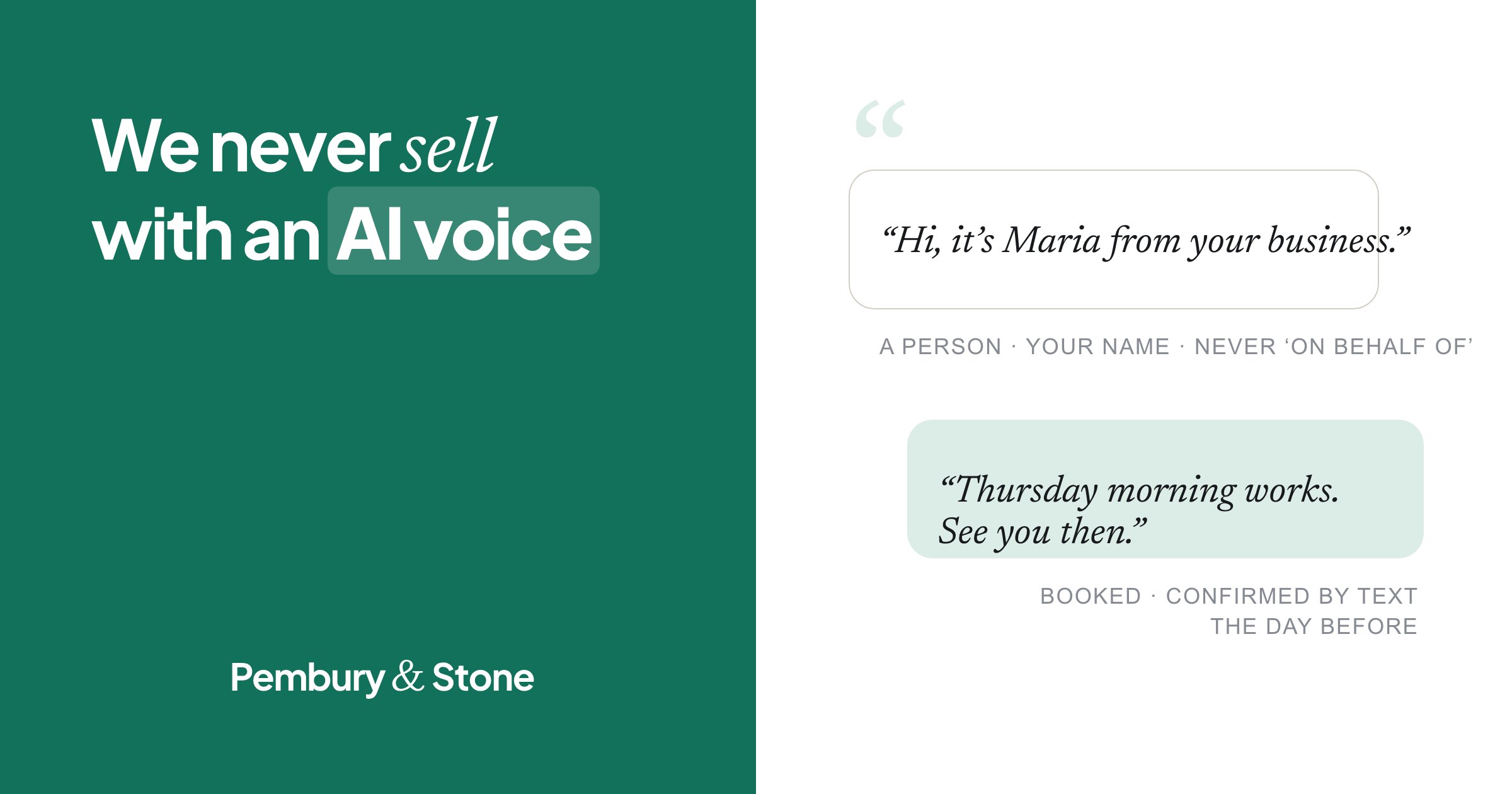
Every month someone shows us a new AI voice. It is impressive. It is cheap. It never sleeps. And we still do not use one on any call that sells, chases or persuades.
This is not a technology position. It is a customer position. AI voice calls have become very good, very fast, and plenty of owners in Malta are being offered them right now. So this post sets out, plainly, what these systems are, what customers think of them, what the law in the EU and Malta asks, where a machine genuinely helps, and why our rule stays the same.
What AI voice calls are now, and why businesses are tempted
An AI voice agent is software that makes or answers a phone call and holds a conversation. It is not the old recorded message that says “press one”. It listens, answers questions from what you have told it, handles a few objections, and can book a slot into a diary. The voice can sound warm, local and unhurried. Some can copy a real person's voice from a short recording.
The pitch to a small business is easy to understand. The agent can ring a hundred numbers an hour, every hour. It does not get tired, take holidays or have a bad Monday. It never forgets to chase a quote. For an owner who is on a ladder in Naxxar when the phone rings, that sounds like the answer.
We understand the temptation, because the problem it solves is real. Missed calls and unchased quotes cost small businesses work every week. The question is not whether the problem is real. It is whether a machine on the phone is the right fix when the call is meant to sell.
What customers say about AI voice calls
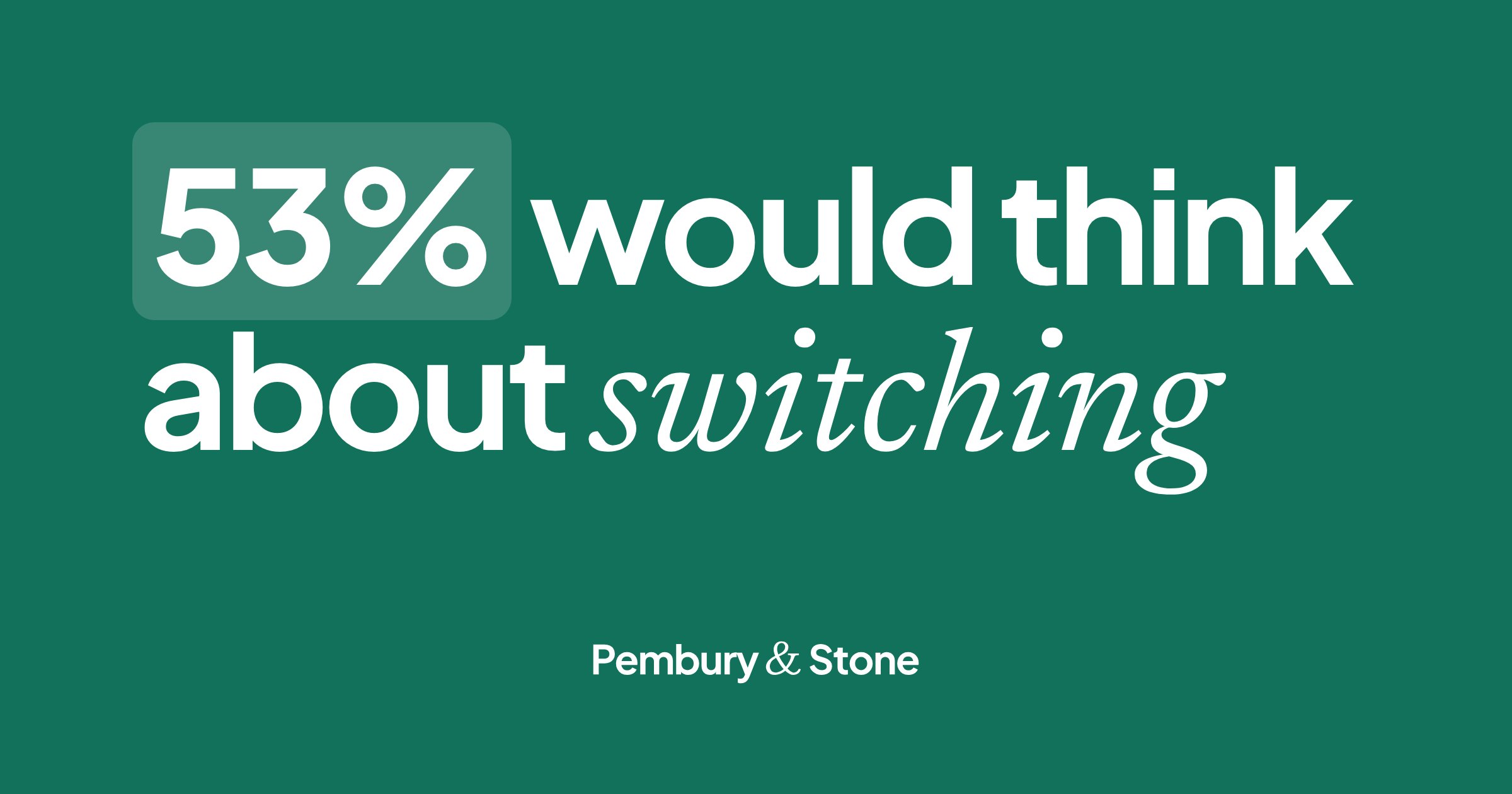
Customers are wary. In a Gartner survey of 5,728 customers, 64% said they would prefer companies did not use AI for customer service. 53% said they would consider switching to a competitor if they found out a company was going to use it. The top worry was that it would get harder to reach a person (Gartner, 2024).
That survey was about service, not sales. On a sales call the stakes are higher, because the customer did not ask to be called. A person who rings a plumber and gets a machine assumes the plumber is too big to care or too small to staff a phone. Either way, they ring the next one. In Malta, where everyone knows everyone, they also mention it.
The field study that tested AI sales calls
The best evidence on AI sales calls is a field experiment published in Marketing Science. A large financial services company randomly assigned more than 6,200 customers to receive structured outbound sales calls from either a chatbot or a human worker (Luo, Tong, Fang and Qu, 2019).
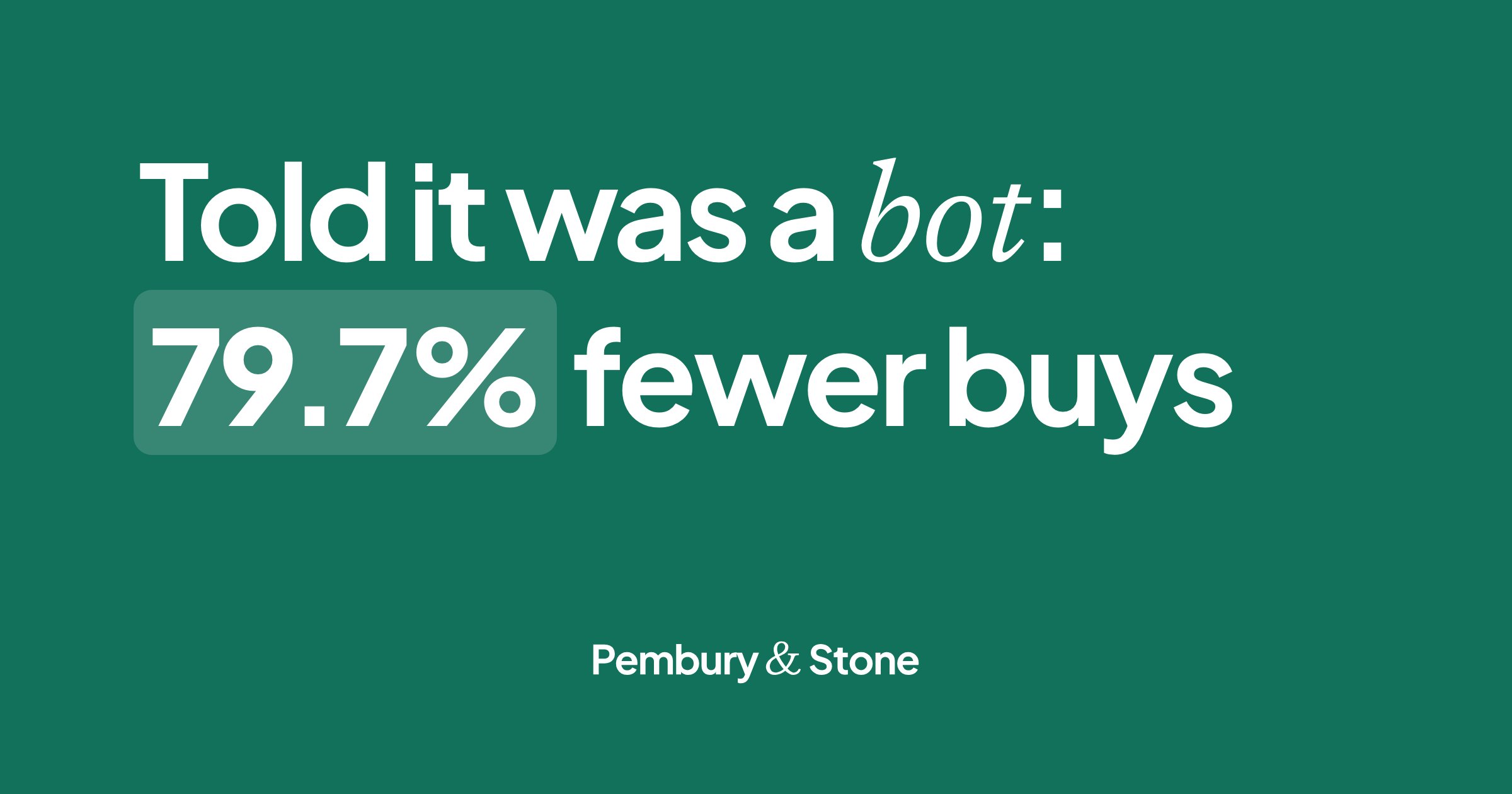
The result is honest and uncomfortable. Chatbots that did not say what they were sold as well as proficient staff, and four times as well as inexperienced ones. But when the bot said it was a bot before the conversation, purchases fell by more than 79.7%. Calls got shorter. Customers were curt. They saw the disclosed bot as less knowledgeable and less empathetic.
Read that twice. The machine sold well only while the customer did not know it was a machine. In the EU, that option is now closed, as the next section explains. An AI voice that must say what it is up front starts every sales call with a handicap the study measured.
Hang on. Am I talking to a real person?
Are AI voice calls legal in Malta and the EU?
Mostly yes, with conditions, and the conditions bite hardest on calls that sell. Three sets of rules apply. We cover them briefly here. Our guide to cold calling in Malta sets out the direct marketing law in full.
This is general information, not legal advice. How the rules apply depends on your facts. If you are unsure, ask the Information and Data Protection Commissioner (IDPC) or a lawyer.
The AI Act: the voice must say it is a machine
Article 50 of the EU AI Act has applied since 2 August 2026. Paragraph 1 says: “Providers shall ensure that AI systems intended to interact directly with natural persons are designed and developed in such a way that the natural persons concerned are informed that they are interacting with an AI system, unless this is obvious from the point of view of a natural person who is reasonably well-informed, observant and circumspect, taking into account the circumstances and the context of use.”
Paragraph 5 sets the timing: the information must be given “in a clear and distinguishable manner at the latest at the time of the first interaction or exposure” (EU AI Act, Article 50). A natural-sounding voice on a call you did not expect is the very case where it is not obvious. So the AI voice has to say what it is at the start. Article 50(4) adds a separate duty to disclose audio that is a deep fake, so a cloned voice of a real person brings its own problem.
Automated calls: consent first
Malta's S.L. 586.01, regulation 9(1), says direct marketing by “an automatic calling machine” needs the recipient's “prior consent in writing”. That applies to companies as well as consumers. A live call made by a person needs no prior consent, only a prompt “stop” when asked.
The Maltese text does not define an automatic calling machine, and whether a conversational AI voice counts is not settled. It talks without a person on the line, so the cautious reading is that it does. Do not use an AI voice to sell to anyone who has not agreed in writing. The United States has already gone that way: in February 2024 the FCC ruled that AI-generated voices count as an “artificial or prerecorded voice” under its robocall law, so they need prior consent there too (FCC Declaratory Ruling FCC 24-17).
The GDPR: the data behind the call
An AI voice records, transcribes and stores what people say. That is personal data. You need a lawful basis, people must be told how their data is used, and anyone can object to direct marketing at any time (GDPR, Article 21). If a provider runs the system for you, you need a written agreement under Article 28 that says exactly what it may do with the data. Ask where the recordings go, and whether they train anyone's model.
AI on the phone: where a machine helps, and where it hurts
We are not against software. We use it every day. The line we draw is about the kind of call. A machine is good at work the customer has already agreed to, and at work the customer never sees. It is bad at work that needs trust.
- Reminders and confirmations: a text or a call the day before an appointment the customer booked. Useful, expected, and nobody is being persuaded.
- Transcription: turning a call into notes, so the person who made it can read it back and nothing is lost.
- Sorting: tagging which enquiries are new, which are chasing a quote, and which are suppliers, so the right person calls the right one first.
- Drafting: a first draft of a follow-up message or a call summary, from notes and answers you already have.
- Out-of-hours answers: opening times and directions, if the caller is told it is a machine and can reach a person.
- Where it hurts: any call that sells, chases a quote, handles a price objection or asks someone to change supplier. Those calls need judgement, local knowledge and a voice the customer can trust.

AI receptionists are a different question
An AI receptionist that answers your phone at midnight is not the same as an AI voice that rings strangers to sell. The first can be a fair tool for routine calls, as long as it says what it is. We compare it with answering services and a sales desk in our guide to a virtual receptionist in Malta. The rule in this post is about calls that sell.
Software can sort the calls. A person should make them.
Our rule: no AI voice calls that sell
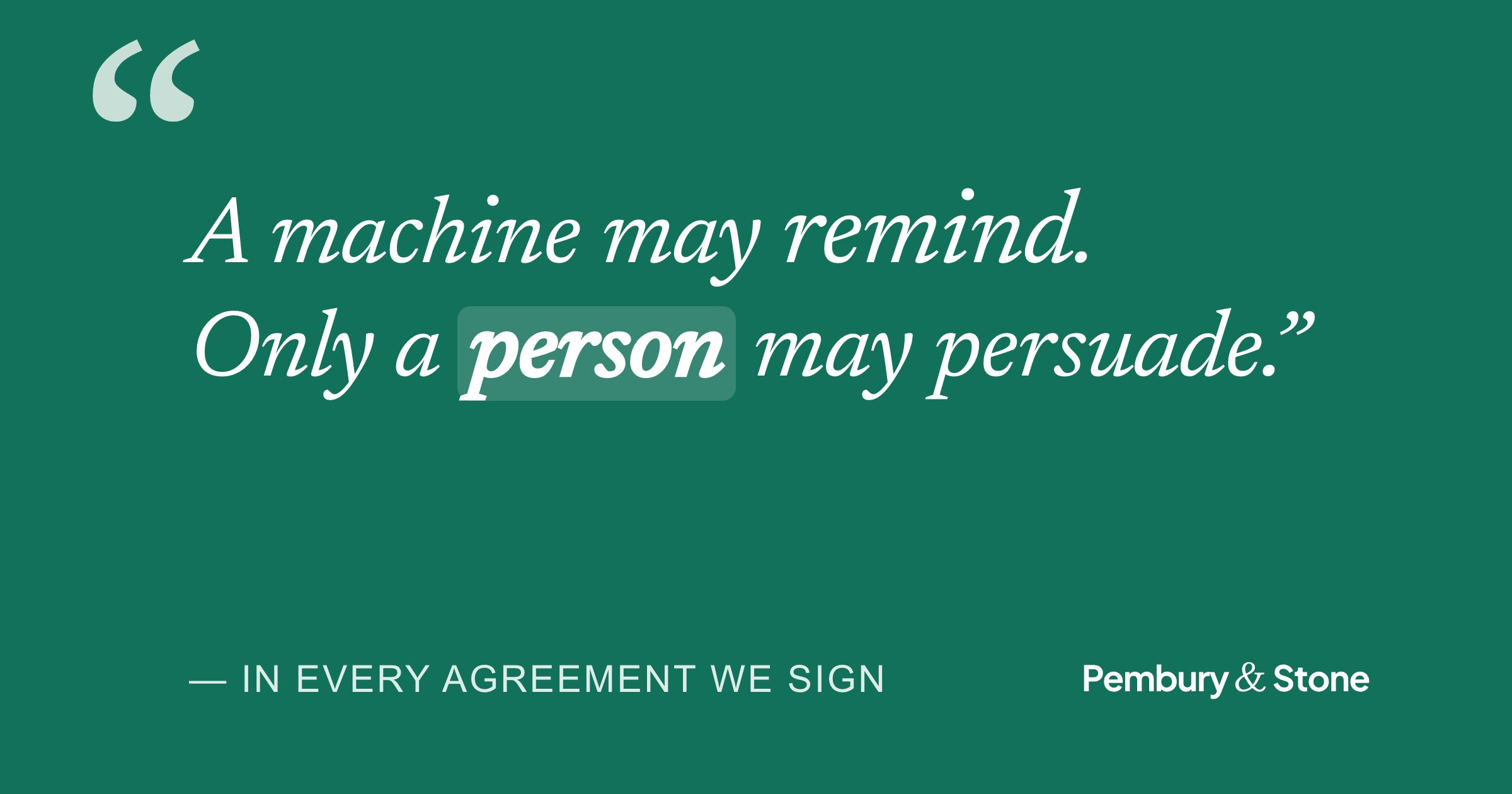
On the phone, the rule is short. A machine may remind. Only a person may persuade.
When we run an outsourced sales desk for a small business, every call that sells, chases or persuades is made by a person. That person says their name and the business they call for in the first breath: “Hi, it’s Maria from Borg Tiling.” They know the job, because they have read what the owner told us. They can hear when “not now” means “call me in March”, and when it means “stop”.
The rule is written into the agreement, not just the website. It is also in the data processing agreement, which names every use of any AI model on your data. If something is not on that list, we do not do it. Your customers' data stays in the EU and is never used to train anything.
What it costs us
People cost more than software. We make it work because the same few people stay on your account and get faster every month. They learn your prices, your lead times and the questions your customers always ask.
If a machine ever books more jobs for a small business than a person who knows the job, we will say so. It has not happened yet.
AI voice agents for sales: questions to ask any provider
If someone offers you AI voice calls, or an agency that uses them, ask these first. A good provider answers each one plainly. Our guide on what to look out for when outsourcing sales has the wider checklist.
Can I speak to someone, please?
- Does the voice say it is AI, and when? It should be in the first sentence, not when someone asks.
- Who has given consent to be called? For an AI voice selling to new people, ask to see the written consent.
- Can the caller reach a person, at once? Ask what happens when they say “can I speak to someone?”.
- Does a “stop” end it on every channel? And how fast does it reach your own list?
- Is it cloning anyone's voice? If so, whose, with what permission, and how is it disclosed?
- Where do the recordings and transcripts go? Inside the EU, for how long, and are they used to train a model?
- What is written in the contract? Every use of AI on your customers' data should be named in the data processing agreement.
Do it yourself, or hand it over
Use the machines for what they do well. Let one send the reminder the day before. Let one transcribe your calls and draft your follow-ups. That alone saves hours a week, and nobody minds.
Then make the selling calls yourself, or have a person make them. If you do not have the time, that is what we do. Our desk in Malta calls in your name, between nine and one and four and seven, never on a Sunday. One “stop” ends it. A person makes every call that sells. Talk to our sales team and we will tell you plainly whether it would work for your business.
Questions owners ask
Are AI phone calls legal in Malta?+
They can be, with conditions. Since 2 August 2026 the EU AI Act requires that people are told they are talking to an AI system, at the latest at the first interaction. For sales calls, the cautious reading of S.L. 586.01 is that an AI voice is an automatic calling machine, which needs prior consent in writing. This is general information, not legal advice.
Does an AI voice agent have to say it is AI?+
Yes, in the EU, unless it is obvious to a reasonably well-informed person. Article 50 of the AI Act says the information must be clear and given at the latest at the first interaction. On a phone call with a natural-sounding voice, it is rarely obvious, so it should be said at the start.
Is AI cold calling allowed in the EU?+
Rules differ by country, but most EU countries require consent for automated marketing calls under the ePrivacy rules. Whether a conversational AI voice counts as an automated calling system is not settled, so the safe course is to get consent in writing first. Live calls by a person follow different, lighter rules.
Do AI sales calls work?+
In one large field study, chatbots that did not say what they were sold as well as proficient staff. When they said they were bots before the conversation, purchases fell by more than 79.7%. In the EU the voice now has to say it is AI, so that early disclosure is the normal case.
Does Pembury & Stone use AI at all?+
Behind the scenes, where it helps, and every use is named in the data processing agreement. On the phone, a person makes every call that sells, chases or persuades, and that rule is in every agreement we sign.
- Gartner Survey Finds 64% of Customers Would Prefer That Companies Didn't Use AI for Customer Service, Gartner (2024).
- Frontiers: Machines vs. Humans: The Impact of Artificial Intelligence Chatbot Disclosure on Customer Purchases (Luo, Tong, Fang and Qu), Marketing Science 38(6), 937–947, INFORMS, Marketing Science (2019).
- Article 50: Transparency Obligations for Providers and Deployers of Certain AI Systems (Regulation (EU) 2024/1689, the AI Act), EU Artificial Intelligence Act (2024).
- Processing of Personal Data (Electronic Communications Sector) Regulations, S.L. 586.01, Laws of Malta (legislation.mt) (2003, as amended to 2013).
- Direct Marketing, Information and Data Protection Commissioner.
- Regulation (EU) 2016/679 (General Data Protection Regulation): Articles 21 and 28, EUR-Lex (2016).
- Implications of Artificial Intelligence Technologies on Protecting Consumers from Unwanted Robocalls and Robotexts, Declaratory Ruling (FCC 24-17), Federal Communications Commission (2024).